
 Welcome Patient ||

Dr. Samuel Hahnemann
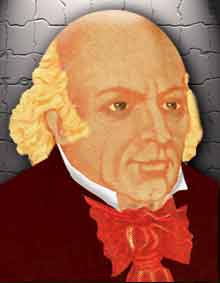
Homoeopathy was invented by Dr. Samuel Hahnemann (1755–1843). He was an allopathic doctor. There is an interesting story behind the invention of the homoeopathic system. It is said that he failed to cure his child, suffering from typhoid. He began thinking about the failure of his treatment. Once he was reading about cinchona, which was used for curing malaria, and to his surprise, he found that cinchona also caused malaria-like symptoms in healthy people. He took a piece of cinchona bark and studied its effect. When he diluted the cinchona, he found that its therapeutic effect was better. This led to the development of Homoeopathy and its classical approach. He derived the homoeopathic principle — "Similia similibus curentur" — which translates to "like cures like." In other words, a substance capable of causing disease-like symptoms in a healthy person is capable of curing that same disease in a sick person. Based on this principle, the remedy used in this system was developed, extracted from natural resources like plants, animals, and minerals.